Navigating digital transformation is not just a buzzword—it’s a strategic imperative that defines how organizations remain competitive and innovative. As businesses face evolving technologies, shifting customer expectations, and an increasingly interconnected global market, the process of navigating digital transformation becomes essential to achieve sustainable growth and operational efficiency. In this post, we’ll explore the key trends driving digital transformation, the challenges organizations face, and practical solutions to overcome these obstacles.
Table of contet
The Rise of Digital Transformation
Over the past decade, digital technologies have reshaped every aspect of business—from how companies operate internally to how they interact with customers. Today, the Fourth Industrial Revolution is in full swing, bringing together cloud computing, artificial intelligence (AI), the Internet of Things (IoT), and big data analytics. These technologies enable companies to harness real-time insights, automate routine tasks, and drive innovation across all business functions. The ongoing shift towards digital transformation is a response to market pressures, competitive forces, and the need for agility in a constantly changing environment.
Key Trends Shaping Digital Transformation
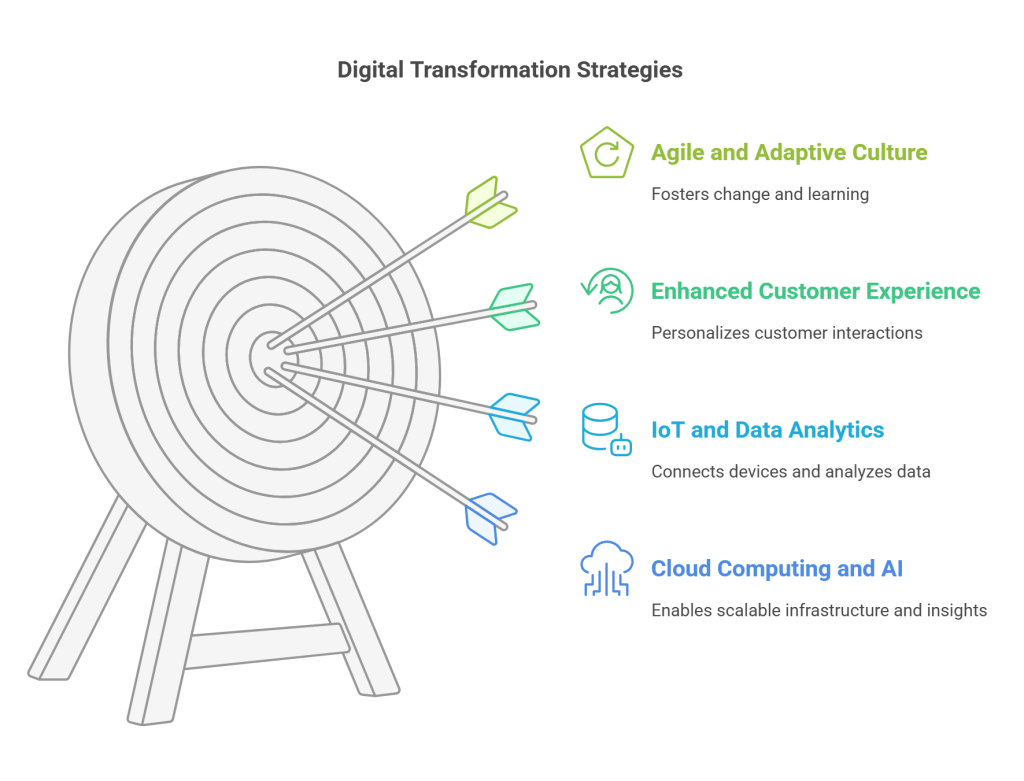
- Cloud Computing and AI Integration
Cloud computing has emerged as the backbone of digital transformation. Cloud solutions allow organizations to adopt advanced technologies rapidly by enabling scalable infrastructure and flexible resource management. Coupled with AI, companies can automate processes, gain predictive insights, and deliver personalized customer experiences. - The Internet of Things (IoT) and Data Analytics
IoT connects devices, sensors, and systems, creating an ecosystem where data flows seamlessly between operational components. When combined with advanced data analytics, IoT helps companies monitor real-time performance, optimize supply chains, and improve maintenance procedures through predictive analytics. - Enhanced Customer Experience
Digital transformation is increasingly focused on delivering a superior customer experience. By leveraging digital channels—such as mobile apps, social media, and online platforms—organizations can offer personalized services that meet the unique needs of each customer. From chatbots to personalized recommendations, technology is redefining how businesses engage with their audiences. - Agile and Adaptive Organizational Culture
A key aspect of successful digital transformation is fostering a culture that embraces change and continuous learning. Agile methodologies enable organizations to quickly adapt to market shifts and technological advancements. Organizations that invest in employee training and change management are better equipped to navigate transformation challenges and capitalize on new opportunities.
Major Issues in Digital Transformation
Despite its potential, digital transformation is fraught with challenges. Here are some of the key issues organizations must address:
- Resistance to Change
One of the most significant hurdles is internal resistance. Employees and even some leaders may be hesitant to adopt new processes or technologies. This resistance often stems from a fear of the unknown or concerns about job security. Overcoming this challenge requires clear communication, inclusive leadership, and robust change management strategies. - Legacy Systems Integration
Many organizations still rely on outdated legacy systems that are not compatible with modern digital tools. Integrating these systems with new technologies can be complex, costly, and time-consuming. Companies must plan carefully to upgrade or replace legacy systems while ensuring that critical business operations remain uninterrupted. - Skill Gaps and Talent Shortages
The rapid pace of digital innovation means that many organizations struggle to find talent with the right digital skills. Bridging the digital talent gap requires investing in employee training, partnering with educational institutions, and sometimes recruiting new talent with specialized expertise. - Budget Constraints and ROI Uncertainty
Digital transformation initiatives often require significant upfront investments. Budget constraints and uncertain returns can make it challenging for organizations to justify and secure the necessary funding. A well-structured financial strategy and a clear demonstration of potential ROI are critical to overcoming these barriers.

Practical Solutions for Successful Transformation
To address these challenges and harness the benefits of digital transformation, organizations need to adopt a strategic approach:
- Develop a Clear Digital Strategy
A robust digital transformation strategy serves as a roadmap for achieving your business objectives. This strategy should outline the key technologies to adopt, the steps for integrating new systems, and the measures for tracking progress and ROI. A clear vision helps align all stakeholders and provides direction during the transformation process. - Implement Comprehensive Change Management
Change management is crucial for overcoming resistance. Organizations should communicate openly about the benefits of digital transformation, involve employees in the planning process, and provide regular training and support. By creating an inclusive environment, businesses can foster a culture of innovation and adaptability. - Upgrade Legacy Systems Gradually
Rather than a complete overhaul, consider a phased approach to upgrading legacy systems. Identify critical areas where integration with new technologies will yield the most benefits, and prioritize those for immediate upgrades. This incremental approach minimizes disruptions and allows for smoother transitions. - Invest in Employee Training and Upskilling
Addressing the digital talent gap requires a commitment to ongoing learning. Organizations should establish training programs, offer certifications, and encourage knowledge-sharing among employees. Upskilling the workforce improves productivity and boosts employee morale and retention. - Utilize Scalable Cloud Solutions and Automation Tools
Cloud platforms offer scalability and flexibility that are essential for modern digital operations. By leveraging cloud services, organizations can deploy advanced analytics, AI, and automation tools without incurring the high costs associated with traditional IT infrastructure. This enables businesses to scale up operations as needed quickly. - Measure and Optimize
Continuous improvement is a core principle of digital transformation. Implement key performance indicators (KPIs) to monitor progress and identify areas for optimization. Regular evaluations help ensure that digital initiatives are aligned with business objectives and deliver tangible results.

The Road Ahead: Navigating Digital Transformation Successfully
Successfully navigating digital transformation requires more than just technology—it demands a fundamental shift in mindset, strategy, and operations. By embracing emerging trends, addressing key challenges head-on, and implementing practical solutions, organizations can unlock new opportunities for innovation, efficiency, and growth.
The journey may be complex, but the rewards are significant. Companies that commit to a well-planned digital transformation are better positioned to adapt to market changes, improve customer experiences, and maintain a competitive edge in an increasingly digital world.

Ready to Transform Your Business?
At Running Digital, we specialize in guiding businesses through the digital transformation journey. Our team of experts combines industry knowledge with cutting-edge digital marketing strategies to help you achieve measurable results. Whether you’re looking to upgrade legacy systems, empower your workforce with new skills, or enhance your customer experience through innovative digital tools, Running Digital is here to help.
Contact us today to learn how Running Digital can accelerate your transformation journey and drive your business forward.